 NIWA - Metadata Catalogue
Keyword
sediment, grain size, ironsands
1 record(s)
Type of resources
Topics
Keywords
Contact for the resource
Provided by
Years
Representation types
Status
-
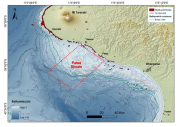
Seabed sampling of the broader Patea Shoals region was conducted between September 2011 and May 2012. Sampling sites were allocated within the proposed project area (PPA), and across the broader Patea shoals region over the inner shelf, mid-shelf and deeper offshore areas. Seabed habitats and macrobenthos were visually characterised at 144 sites using underwater video footage and still photographs. Surficial sediments and associated infauna were collected from 331 samples from 103 sites (~3 replicates cores per site), and benthic macrofauna and macroflora specimens were collected from 116 sites using a benthic dredge. All samples were collected under NIWA’s special permit (505) issued by the Ministry of Fisheries (now Ministry for Primary Industries). A re-colonisation experiment was carried out at two sites (Mahanga Bay and Evans Bay) within Wellington Harbour. At each site, three replicates of each of three experimental treatments were deployed, using treatments of high-iron, medium-iron and low-iron (de-ored sand) concentrations • Video observations of the seabed identified seven major habitat types (sand waves, rock outcrops, sand ripples, wormfields, Tucetona beds, bivalve rubble, and bryozoan rubble) within the Patea Shoals region. Habitats varied both offshore (i.e. inshelf, midshelf, and offshelf) and alongshore (north to south). • Overall, although several Patea Shoal habitat types supported significantly different benthic assemblages, mining sites did not differ significantly from non-mining sites in either the video, epifaunal dredge or infaunal core datasets. • Sand wave and rippled sands supported low abundances and species richness of both infauna and epifauna organisms. • Wormfields supported significantly higher abundances of infauna, but this pattern was driven by high but patchy densities of the Sabellid tubeworm, Euchone sp A, along with a few characteristic but low density species. Euchone sp A, though common throughout the mid-shelf zone, appears to be an undescribed species. • Biogenic habitats present in deeper areas offshore of the PPA supported significantly higher diversity and abundance than mid-shelf and inner-shelf zones. These offshore habitats were characterised by both early-colonising bivalve/rubble epifauna in the shallower (45-60 m) offshore depth zones, and late colonising bryozoan/rubble assemblages in the deeper (>60 m) offshore zone. • New species of bryozoans, sponges, annelids, and algae, as well as new records for many groups for the region, were identified during the survey. • The concentration of Vanadium Titano-Magnetite in the surface sediments appears to play an insignificant role in structuring marine benthic communities in the study area. This is further supported by results of the re-colonisation experiment which showed that the concentration of iron in sediments was not a key driving factor in the re-colonisation of soft-sediment (sandy) communities at either of the Wellington Harbour study sites.