 NIWA - Metadata Catalogue
Keyword
seafloor
1 record(s)
Type of resources
Topics
Keywords
Contact for the resource
Provided by
Years
Representation types
Status
-
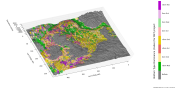
NIWA surface sediment data from the NZOI A-Y stations that have been standardised to the dbseabed format. NIWA samples have been processed and QC'd by INSTAAR University of Colorado, Boulder. dbSEABED creates unified, detailed mappings of the materials that make the seafloor by efficiently integrating thousands of individual datasets. The goal is to bring decades of seabed information - and today's information - from marine geology, biology, engineering and surveys into one seabed mapping that can fulfil the community needs for ocean-bottom information on many spatial scales. The system deals with seabed texture, composition, acoustic properties, colour, geology and biology. Quality assurance is achieved by checks on data at data entry, by error-trapping in the data-processing software, and by working the data intensively in various collaborative research programs. dbSEABED was devised to be robust in an inexact and incomplete information environment - marine geosciences. There are two versions of the data available: (1) the archives data, which are available as MS Excel spreadsheets - one for each letter of the A-Z station registers; (2) NIWA nzSeabed standard data, which is the same standard afters being standardised by dbSeabed and are available as ASCII text files. The data are available at either Q:\Ocean_Geology\Sediment%20samples/ or file://niwa.local/groups/wellington/Ocean_Geology/Sediment%20samples/