 NIWA - Metadata Catalogue
Benthic flora and fauna of the Patea Shoals region, South Taranaki Bight
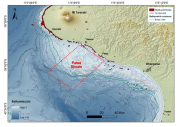
Seabed sampling of the broader Patea Shoals region was conducted between September 2011 and May 2012. Sampling sites were allocated within the proposed project area (PPA), and across the broader Patea shoals region over the inner shelf, mid-shelf and deeper offshore areas.
Seabed habitats and macrobenthos were visually characterised at 144 sites using underwater video footage and still photographs.
Surficial sediments and associated infauna were collected from 331 samples from 103 sites (~3 replicates cores per site), and benthic macrofauna and macroflora specimens were collected from 116 sites using a benthic dredge. All samples were collected under NIWA’s special permit (505) issued by the Ministry of Fisheries (now Ministry for Primary Industries).
A re-colonisation experiment was carried out at two sites (Mahanga Bay and Evans Bay) within Wellington Harbour. At each site, three replicates of each of three experimental treatments were deployed, using treatments of high-iron, medium-iron and low-iron (de-ored sand) concentrations
• Video observations of the seabed identified seven major habitat types (sand waves, rock outcrops, sand ripples, wormfields, Tucetona beds, bivalve rubble, and bryozoan rubble) within the Patea Shoals region. Habitats varied both offshore (i.e. inshelf, midshelf, and offshelf) and alongshore (north to south).
• Overall, although several Patea Shoal habitat types supported significantly different benthic assemblages, mining sites did not differ significantly from non-mining sites in either the video, epifaunal dredge or infaunal core datasets.
• Sand wave and rippled sands supported low abundances and species richness of both infauna and epifauna organisms.
• Wormfields supported significantly higher abundances of infauna, but this pattern was driven by high but patchy densities of the Sabellid tubeworm, Euchone sp A, along with a few characteristic but low density species. Euchone sp A, though common throughout the mid-shelf zone, appears to be an undescribed species.
• Biogenic habitats present in deeper areas offshore of the PPA supported significantly higher diversity and abundance than mid-shelf and inner-shelf zones. These offshore habitats were characterised by both early-colonising bivalve/rubble epifauna in the shallower (45-60 m) offshore depth zones, and late colonising bryozoan/rubble assemblages in the deeper (>60 m) offshore zone.
• New species of bryozoans, sponges, annelids, and algae, as well as new records for many groups for the region, were identified during the survey.
• The concentration of Vanadium Titano-Magnetite in the surface sediments appears to play an insignificant role in structuring marine benthic communities in the study area. This is further supported by results of the re-colonisation experiment which showed that the concentration of iron in sediments was not a key driving factor in the re-colonisation of soft-sediment (sandy) communities at either of the Wellington Harbour study sites.
|
|
Citation proposal
Tara Anderson (NIWA) - Jennifer Beaumont (NIWA). . https://dc.niwa.co.nz:/niwa_dc/srv/api/records/efa4d0c1-ffe5-3540-36ca-e8085a768fdf |
- Identification
- Content
- Distribution
- Quality
- Lineage
- Spatial rep.
- Ref. system
- Acquisition info
- Metadata
- Portrayal
- Md. constraints
- Md. maintenance
- Schema info
Identification
Data identification
Citation
- Date ( Creation )
- 2015-06-04T00:55:00
- Date ( Revision )
- 2015-06-04T00:55:00
- Purpose
- NIWA was contracted by Trans-Tasman Resources Ltd (TTR) to survey and describe the benthic (seafloor) flora and fauna on and in the sediments of the broader Patea Shoals region of the South Taranaki Bight (STB), and to compare the proposed project area (PPA) with adjacent mid-shelf, inner shelf and deeper offshore areas. The proposed excavation of seabed sediments would result in large volumes of sediment being processed, with de-ored sediments deposited back onto the seabed. NIWA was also contracted by TTR to experimentally compare the recolonisation of iron rich and de-ored sediments by benthic organisms.
- Credit
- J. Beaumont, T.J. Anderson, T.J. and A.MacDiarmid of NIWA undertook the data collection and analysis, with funding from TTR.
- Status
- Completed
Author
Author
Point of contact
- Spatial representation type
- Vector
- Topic category
-
- Biota
- Environment
Extent
- Description
- Taranaki Region continental shelf off Patea
coordinates
No information provided.
N
S
E
W
))
- TimePeriod
- 2011-09-222012-05-07
-
- benthic ecology, habitat, species, communities, biodiversity, video, still, imagery, dredge, core, infauna, meiofauna,epifauna,macrofauna,invertebrates, sediment, grain size, ironsands
- NIWA Project Codes
-
- TTR11301
Legal constraints
- Use limitation
- 1) Field surveys involved spatially-intensive sampling, but were undertaken across several months due to arduous weather conditions and logistical constraints). Consequently, these data and report findings reflect the best available spatial information given these temporal constraints. No temporal sampling was undertaken to determine the natural changes of this system. 2) Due to the exposure and frequent storm disturbances, an initial pilot recolonisation experiment proved untenable at the Taranaki study site. As a result, the recolonisation experiment was undertaken within Wellington harbour using sand collected from the South Taranaki Bight.
- Other constraints
- confidential client data, for use by NIWA staff only
Security constraints
- Use limitation
- Permission from client is required for any use of these data. NIWA contact: Alison MacDiarmid
- Classification
- Confidential
Associated resource
- Title
- Beaumont, J., Anderson, T.J. and MacDiarmid, A. (2013). Benthic flora and fauna of the Patea Shoals region, South Taranaki Bight. NIWA Client Report No: WLG2012-55. 184 p.
- Association Type
- Larger work citation
Locale
- Language
- English
Character encoding
No information provided.
Distribution
Lineage
Lineage
- Statement
- benthic data have been processed, checked, analysed and reported on.
Scope
- Hierarchy level
- Dataset
- Dataset
- TTR dataset
Ref. system
Reference system
No information provided.
- Reference system identifier
- OGP / urn:ogc:def:crs:EPSG::4326
- Reference system identifier
- NZST/NZDT
Metadata
mdb:MD_Metadata
- Metadata identifier
- efa4d0c1-ffe5-3540-36ca-e8085a768fdf
Locale
- Language
- English
- Character encoding
- UTF8
Custodian
NIWA National Institute of Water and Atmospheric Research
301 Evans Bay Parade
Hataitai
Wellington
6021
New Zealand
Hierarchy level
- Resource scope
- Dataset
Text
No information provided.
- Date info ( Creation )
- 2015-06-09T15:33:25
- Title
- ISO 19115-3
Md. constraints
Security constraints
- Use limitation
- Permission from client is required for any external use of this information. NIWA contact: Alison MacDiarmid
- Classification
- Restricted
Overviews
thumbnail
Provided by

Views
efa4d0c1-ffe5-3540-36ca-e8085a768fdf
Access to the portal
Read here the full details and access to the data.
Associated resources
Not available